Free US Shipping on orders over $79!

What’s the Safest Way for Your Dog to Get In and Out of the Car? Rear Hatch vs. Side Door Dog Ramps

Quick answer: For most large, senior, or mobility-limited dogs, a dog ramp for a car placed at the rear hatch is the safest and most stable option because it allows straight, low-impact movement. A dog ramp for a car side door can work when the door opens fully, the ramp fits securely on the seat or floor without overhang, and stabilization accessories are used. Rear entry usually does a better job of minimizing joint strain and limiting twisting, but side-door entry can be appropriate depending on vehicle type and interior layout.

This decision is about health, not convenience. Jump-related impact and body rotation are two of the most common contributors to back, hip, and knee injuries in dogs. Choosing the safest ramp placement can help protect joint health now and preserve mobility as your dog ages.

Why Dog Ramp Placement Matters for Joint Health

Veterinary guidance consistently emphasizes that using a dog ramp or stairs helps reduce strain caused by jumping and lowers the risk of long-term joint damage. When dogs jump out of vehicles, they typically land front-first and absorb most of the force through their shoulders and forelimbs. Many dogs also twist their body mid-air to orient themselves for landing, which places uneven stress on hips, knees, and the spine.

This combination of impact and rotation is especially problematic for large breeds, senior dogs, and dogs with arthritis or previous orthopedic injuries. Even dogs that appear athletic and confident can experience cumulative damage from repeated jumping over time.

Dog ramps address this problem by allowing dogs to move in a straight, controlled line rather than dropping down and absorbing force unevenly. However, the benefits of a ramp depend heavily on how it is used. If a ramp forces a dog to turn sharply, step sideways, or hesitate at the top or bottom, it can undermine the very joint protection it is meant to provide. That is why ramp placement matters just as much as ramp quality.

The goal is simple. Reduce jump height. Reduce twisting. Encourage steady, straight movement every time your dog enters or exits the vehicle.

Dog Ramps in Rear Hatch vs. Side Door: Pros & Cons

Rear Hatch Dog Ramp Placement

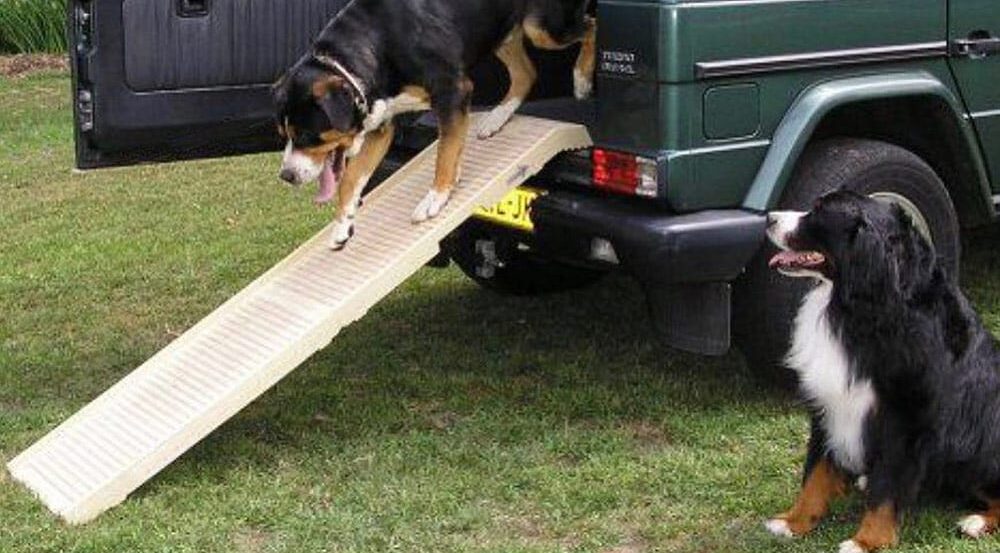
Rear hatch placement typically provides more room for a stable ramp base. The ramp can rest evenly on the bumper or cargo threshold, which helps prevent wobbling and shifting. This stability allows dogs to walk straight up or down the ramp without needing to turn their body at the top or bottom.

Straight-line movement significantly reduces twisting through the hips, knees, shoulders, and spine. For large dogs, hesitant dogs, or dogs with joint issues, this can make a noticeable difference in comfort and confidence.

Rear hatch placement also works well for many vehicle types, including SUVs, vans, hatchbacks, and trucks, when cargo space allows. It is often the preferred setup for owners using a dog ramp for SUV, especially when the dog rides in the cargo area rather than on a seat.

Considerations:
Rear entry requires enough cargo space for both the ramp and the dog to stand comfortably once inside. In smaller vehicles, the cargo area may feel cramped. Rear hatch placement can also be less convenient if your dog normally rides in the backseat or if parking conditions limit space behind the vehicle.

Best use cases:
Rear lift gate or tail gate ramps are ideal for owners using a dog ramp for a truck or SUV with sufficient rear space. This setup is common in a dog-friendly SUV with a ramp arrangement, where the vehicle is intentionally configured to prioritize safe pet access and stability.

Side Door Dog Ramp Placement

Side door placement is often the most practical option for dogs that ride in the backseat or when rear cargo space is limited. For sedans and some SUVs, side entry may be the only feasible way to use a ramp.

Side door dog ramps can still significantly reduce the strain of jumping, particularly when paired with proper stabilization. For many dogs, walking up a ramp into a seat is far safer than jumping directly into the vehicle.

Considerations:
Side door use places more demands on ramp fit and vehicle geometry. The door must open wide enough, ideally close to 90 degrees from the body of the car. Ramp width must fit the door opening and seat depth. If the ramp hangs off the seat, it can feel unstable without added support.

This is where systems like PetStep side door ramp come in. If your PetStep ramp overhangs the seat slightly, the side entry strap kit is designed to stabilize the ramp and prevent shifting. Depending on the vehicle and whether seats slide or fold, side-door placement may still be appropriate even when rear entry is not.

The PetStep Side Entry Support Strap stabilizes the ramp when it’s used through a vehicle’s side door, where one edge of the ramp would otherwise be unsupported. The strap hooks securely to the top of the PetStep ramp and anchors to the vehicle’s door frame using a rubber-coated steel door hook, creating a firm, balanced connection point. 

Once adjusted with the cam buckle, the strap holds the ramp steady and prevents tipping or shifting as your dog walks up or down. It installs in seconds without tools, making side-door entry just as safe and stable as rear hatch use—especially for larger dogs or higher vehicles.

Best use cases:
Side door ramps work best for dogs entering directly into a seat using a dog ramp for car backseat setup, and for vehicles where rear hatch access is not available, but door geometry supports a stable ramp position.

Some owners consider dog steps for car side entry, but steps still require repeated lifting and impact between levels. For dogs with joint concerns, ramps generally provide a smoother and lower-stress option.

Vehicle-Type Considerations

Vehicle-Type Considerations
SUV
Vehicle Type: SUV
Most Common Ramp Placement: Rear hatch preferred; side door possible with proper fit and/or support strap
Sedan
Vehicle Type: Sedan
Most Common Ramp Placement: Side door only
Minivan
Vehicle Type: Minivan
Most Common Ramp Placement: Rear hatch or side door, depending on seating layout
Hatchback
Vehicle Type: Hatchback
Most Common Ramp Placement: Rear hatch usually offers better stability; side door entry is possible with proper fit and/or support strap
Truck
Vehicle Type: Truck
Most Common Ramp Placement: Rear entry into the truck bed is most typical; side door cab entry would require a side entry support strap due to the steepness.

What to Look for in a Ramp

First, a ramp should be wide enough to allow confident footing. Narrow ramps force dogs to sidestep or hesitate, often increasing twisting through the shoulders, hips, and spine.

The walking surface should provide reliable traction in real conditions, including rain, heat, cold, and humidity. Slippery or compressible surfaces can cause sudden weight shifts that strain joints.

Rigidity is critical. Ramps that bounce or flex under load feel unstable and cause dogs to compensate mid-step, which increases joint stress.

The top of the ramp should brace securely against the seat or threshold so it does not slide as weight shifts during entry or exit. Any side-door setup where the ramp does not fully rest on the seat requires a stabilization method.

Ramp length also matters. A ramp that works well as a dog ramp for car in a sedan may be too steep for a taller SUV or truck side door. Match ramp length to the height you are actually using.

Final Takeaway

Dog ramp placement is a health decision. It affects joint strain, body mechanics, and your dog’s confidence every time they enter or exit a vehicle. Rear hatch placement is usually the safest default, but side-door setups can work well when the vehicle allows proper fit and stabilization.

The best dog ramp for car side door and rear entry is one that allows straight, steady movement without hesitation. The PetStep ramp is designed to support both rear hatch and side-door use when vehicle geometry allows, giving pet owners flexibility as dogs age, recover from injury, or experience changing mobility needs.

Reducing repetitive joint strain with the right dog ramp setup can help preserve comfort, independence, and quality of life for years to come.

Save 10% on Your First Order

Join our email and SMS list. Unsubscribe at any time!